

Specifically Designed for Exam Success!
Get a certificate for 35+ hours of live virtual learning with 35 contact hours from your PMI Approved Training Partner (ATP).
Covering topics from PMBOK 7, PMBOK 6, PMI's Agile Practice Guide and Scrum to support the learning with six months of access.
Get access to 2300 PMP® Exam Preparation Questions updated as per the PMI's PMP Exam Content Outline (ECO).
Gain Nine months of flexible access to Project Management Certification online Live Virtual Classroom (LVC) Training sessions.
Comprehensive course material designed by PMI for your reference.
Get expert advice on filling your PMP Exam Application
Our trainers are experts in multiple approaches to project management predictive, adaptive and hybrid
We run regular post-class Live Doubt Clarification sessions to support your exam success.
We have a forum to clarify doubts related to PMP Mock questions by Expert trainers.
iZenBridge Consultancy Private Limited has been reviewed and approved by the
PMI® Authorized Training Partner Program.
Developer, Team leader
Technical leader and technical manager
Assistance manager and resource manager
Business analyst and Sr. Business analyst
Scrum Master, Product Owner
Tester and system analyst
Quality manager and production support manager
Design engineer and quality analyst
Civil engineer and architect
Sales manager and marketing manager
Any profile where management techniques are required.
Sets the Global Standard - Increase your credibility, deep knowledge, and increased earning potential
Show you are the Best - Your clients know they are working with the best
Make you well equipped - Get well equipped with best practices of Project Management
Opens the door to higher earning potential - CIO magazine ranked the PMP as the top project management certification
PMP is Today’s In-Demand Skills - PMP helps to land your dream job
Increase Professional Network - Helps to connect with professionals with similar interests or backgrounds
Leadership
Time management
Mentorship
Team building
Conflict resolution
Project risk assessment
Project communications
Problem-solving
Operations management
Enroll in the PMP® course
Access to our e-learning course including mock questions
After attending 35 hours of Live training get the 35 contact hours certificate
Start filling exam applications, our experts will help you
Submit application
After the approval, you may submit a fee and schedule and pass the exam
Below is the eligibility criteria for PMP® virtual examination
A Minimum 36 months of leading and directing projects
35 contact hours (This program offers you 35 contact hours virtually)
Minimum five years/60 months unique non-overlapping professional project management experience
7,500 hours spent leading and directing projects
35 contact hours (This program offers you 35 contact hours virtually)
It should be a unique non-overlapping professional experience
Our virtual class is designed to provide 100% coverage of the PMP exam content outline, as provided by PMI. With engaging lessons that cover all the necessary content, you’ll be well-prepared for the PMP exam.
This lesson covers most of the Business Environment domain of the PMP Exam (8% of exam questions), including topics related to the external factors that impact project management. Here’s a breakdown of the topics covered:
Topic A: Foundation: This topic focuses on the mindset of project management and covers the 12 principles of project management, as well as Agile values and principles. It helps you understand what a project is and how project management is changing in a rapidly evolving environment. It also provides an overview of the Project Management Body of Knowledge (PMBOK) Seventh Edition.
Topic B: Strategic Alignment: In this topic, you’ll learn how to ensure that projects are executed in alignment with an organization’s strategy. You’ll explore what organizational strategy is, how it’s developed, and how continuous environmental study and exploration can help organizations find the right strategy and initiate the right projects.
Topic C: Project Benefits and Value: This topic focuses on the business case content and the measurements used to assess project benefits. You’ll learn about the different types of benefits that a project can produce and the metrics that can be used to measure them, such as return on investment (ROI) and net present value (NPV).
Topic D: Organizational Culture and Change Management: As the world changes at a rapid pace, projects are often impacted by external changes, and they also trigger change within organizations. In this topic, you’ll learn how project management can result in change in an organization’s environment and how you can manage that change as a project leader. You’ll also explore how changes in the organization’s environment can impact a project and how to navigate those changes.
Topic E: Project Governance: This topic covers the governance framework under which projects operate. You’ll learn how projects are expected to work and how to measure their progress to ensure that they continuously align with an organization’s objectives. You’ll also explore how to learn from other projects and implement best practices.
Topic F: Project Compliance: This topic focuses on the compliances that projects may be subjected to, including compliance related to processes and deliverables. You’ll learn about the different types of compliances that may apply to a project and how to ensure that you’re meeting them.
This lesson is crucial in setting the foundation for the project by covering the initial activities in the project’s first week. It focuses on getting everyone on the same page and ensuring they understand the project objectives and how it will be executed. This topic covers the topics from the People and Process domain of the PMP Exam Content Outline; around 15% of questions are estimated to come from this lesson. Here are the topics covered in this lesson:
Topic A: Identify and Engage Stakeholders : In this topic, you will learn how to identify individuals or groups who will be impacted by the project outcomes or activities. These individuals are called stakeholders, and it is essential to understand and identify them and develop strategies to engage with them effectively.
Topic B: Form the Team : This topic covers the process of identifying the key members of the project team and ensuring they have a good understanding of their roles and how they will work together. In addition, you will learn about the fundamental concepts of a high-performing team, T-shaped professionals, and how to facilitate working agreements using a team charter.
Topic C: Build Shared Understanding : Once the stakeholders and team members are identified, it is essential to create a common understanding of the project goals. In this topic, you will learn how to create alignment by using artifacts like project vision or project charter.
Topic D: Determine Project Approach : This topic covers how to select the appropriate project life cycle based on the project’s characteristics, such as variability in requirements, team experience, and size. You will also learn about the three approaches to project management: predictive, adaptive, and hybrid.
This lesson covers all the essential aspects of project planning. It is divided into various sub-topics, such as planning projects, scope, schedule, resources, budget, risks, quality, and integrating plans. This lesson is crucial, and around 30% (Process Domain) of the questions in project management are related to it.
Topic A: Planning Projects: This topic focuses on the overall context of integrated planning, how various planning variables like scope, schedule, resources, cost, and risk are interrelated.
Topic B: Scope: The scope topic explains how requirements are discovered and exploded for creating the project scope. You will learn the scope exploration methods used in predictive and adaptive ways of working, such as using work breakdown structure, project statement, continuous refinement of product backlog, and user story as a tool for discovering requirements.
Topic C: Schedule: This topic covers project scheduling using tools like the critical path method and adaptive ways of scheduling using release planning, fast-tracking, crashing, velocity, product roadmap, and release planning. You will also learn about planning an MVP and MBI.
Topic D: Resources: This topic focuses on people and material resources and how to engage with third parties. You will also learn about procurement-related topics, managing resource calendars, and resource planning using the resource management plan.
Topic E: Budget: This topic helps you understand how to estimate the project’s cost, create a cost baseline, manage project costs, funding limit reconciliation, and create a project budget.
Topic F: Risks: The risk topic covers identifying, ranking, and planning responses to the risk, dealing with negative and positive risks, and learning risk response techniques such as avoidance, mitigate, transfer, escalate, and accept.
Topic G: Quality: The quality planning topic covers planning for quality, understanding the cost of quality, assuring quality in ongoing project work, and quality monitoring tools.
Topic H: Integrating Plans: This topic covers ensuring the overall integration of various planning aspects and managing ongoing changes with change management. You will also learn how in adaptive life cycle, the backlog refinement helps keep the project on the right path.
This lesson covers the leadership skills and competency a project manager is expected to demonstrate in order to deliver project results. The focus is on the people domain of the PMP exam content outline, this lesson makes up around 25% of the questions.
Topic A: Craft Your Leadership Skills: This topic emphasizes the importance of leadership over management in project management. It covers various leadership styles, including servant leadership, and provides guidance for building high-performing teams. Effective communication, inspiration, and influence are crucial skills for project managers in this domain.
Topic B: Create a Collaborative Project Team Environment: This topic emphasizes the importance of creating a supportive and collaborative environment for the project team. The project manager should encourage real-time information exchange, promote collaboration, and help the team manage their knowledge, including configuration and version control. By creating a collaborative team environment, project managers can ensure that the team is working together effectively and efficiently.
Topic C: Empower the Team: This topic focuses on motivating and empowering the team. It covers various motivation theories, including Maslow’s hierarchy of needs, and provides guidance on how to create a reward and recognition process that promotes collaboration. The project manager should also work on creating decision-making and working agreements within the team to help them take care of their day-to-day work and decision-making.
Topic D: Support Team Member Performance: This topic is focused on supporting individual team members’ performance. Project managers should work with team members, applying emotional intelligence and communication skills, listening to their needs and expectations, and helping them create their own development plan. Providing one-on-one feedback can also help team members excel in their work.
Topic E: Communicate and Collaborate with Stakeholders: Effective communication and collaboration with stakeholders are critical to project success. This topic covers communication management plans, information radiators, and various other tools to ensure real-time communication within the project team and with stakeholders. As a project leader, you need to manage volumes of informal and formal conversations, emails, documents, and so on.
Topic F: Training, Coaching and Mentoring: The leadership role in project management involves developing people and the team. Project managers need to apply various interventions to improve team members’ competencies and skills, such as organizing or facilitating training activities. Providing matrix support and coaching to team members can help take performance to the next level.
Topic G: Manage Conflict: Conflict is a natural part of any team environment, and project managers should create an environment for resolving conflict and apply appropriate strategies to ensure project performance. The project manager should ensure that the team understands how to deal with conflicts in their day-to-day work and create an education and environment for resolving conflict.
This lesson focuses on supporting the project team on an ongoing basis to achieve the project objectives. The topics covered in this lesson should contribute to around 25% of the PMP exam.
Topic A: Implement Ongoing Improvements: This topic emphasizes the importance of continuous learning and improvement in today’s fast-changing environment. It covers techniques such as retrospective lessons learned to support ongoing development in the project. The goal is to improve delivery and processes on an ongoing basis, rather than assuming that initial assumptions and understanding are complete.
Topic B: Support Performance: This topic covers the role of the project manager in supporting the team’s performance by facilitating their working agreement and ensuring it is followed. It also involves helping the team see the impact of their work through real-time communication and problem resolution. Knowledge sharing is also emphasized to help the team perform better.
Topic C: Evaluate Project Progress: This topic is about measuring project performance on an ongoing basis to ensure that the project is moving towards its goals. It involves reflecting on the project’s scope, schedule, and cost on a regular basis, as well as identifying variances and adapting to them. Various flow matrix tools, such as burn-down charts and throughput, can be used to collect quantitative data on work performance.
Topic D: Manage Issues and Impediments: This topic teaches how to manage ongoing issues, impediments, and problems in the project. It involves identifying and recording issues in an issue log and ensuring that project management reviews are helping to resolve them. The project manager’s role is to serve as a leader and remove impediments and issues that are preventing the team from producing the desired results.
Topic E: Manage Changes: This topic covers how to handle the ongoing need for change in various aspects of the project, such as scope, budget, schedule, or team members. It includes both predictive and adaptive approaches to managing changes, depending on the situation. The project manager should be prepared to handle changes and maintain alignment with the project’s goals.
This lesson focuses on the process of closing a project or phase and delivering business value to the customer or organization. It covers topics related to the “Business Environment” and “Process” domains on the ECO and is expected to contribute to around 7% of the PMP exam questions.
Topic A: Project/Phase Closure: Each phase of a project requires closing, and so does the project as a whole. This topic covers the various activities that should be performed during project closure, as well as best practices and things to avoid.
Topic B: Benefits Realization: The ultimate objective of a project is to produce business results. This topic ensures alignment with project benefits during execution and covers the measurement that may be done after the project ends to ensure that the benefits are taken into account for future initiatives.
Topic C: Knowledge Transfer: Knowledge transfer is an ongoing activity, but it becomes especially important during project closure. This topic covers good practices for transferring knowledge to the second group, support group, or maintenance group responsible for ongoing project delivery. It also covers the creation of artifacts to facilitate ongoing support.

Premium Authorized Training Partner of PMI (PMI ATP)
Premium Authorized Training Partner of PMI (PMI ATP)

Best PMP® online Training Material – PMI Developed
Best PMP® online Training Material – PMI Developed

PMI Authorized – Trained instructors
PMI Authorized – Trained instructors

World’s best PMP® Bootcamp – facilitated 100+ virtual sessions
World’s best PMP® Bootcamp – facilitated 100+ virtual sessions

1000+ Informational videos on our YouTube channel
1000+ Informational videos on our YouTube channel

55,000+ subscribers are getting the benefit
55,000+ subscribers are getting the benefit

Continuous Support Through dedicated Forum
Continuous Support Through dedicated Forum

500+ enrollments every month
500+ enrollments every month
While preparing for the PMP exam, you may get doubts requiring fast resolution. We designed the iZenBridge PMP Exam Discussion Forum to support your ongoing discovery of PMP contents. Our PMP experts are committed to quickly resolving your concerns and doubts; the maximum turnaround time is one Business Day. Discussion and participation on our PMP forum are proven ways to maintain the PMP exam preparation rhythm. It is also an excellent way to keep your engagement in an ongoing discussion. Participating in an ongoing discussion helps – sharing is a powerful tool to enhance your understanding. Our experts validate each discussion on the forum.
Let’s join now; here are the steps –

iZenbridge PMP certification question bank is an all-in-one resource for PMP exam preparation, offering over 2300+ questions covering various domains, including Agile and Scrum-based project management. The questions are designed to align with the PMP exam prep guide topics and include six full-length tests that closely mimic the real exam. These tests are an excellent way to check your readiness for the PMP exam and ensure that you are well-prepared to tackle the challenges of the actual exam. With such a vast and comprehensive set of questions, there is no need to look elsewhere for additional PMP exam practice questions.
| Question Paper | Ques. Count |
| Six Full Lenth Mock Questions | 1080 |
| PMP Exam Prep Student Guide Topic Questions
(33 topics of 6 lessons) |
206 |
PMP Domain Questions
|
650 |
| Video-Based Questions on Agile and Scrum Project Scenarios | 50 |
| Questions on Agile and Hybrid Approaches | 150 |
| Total: 2136 | |
Scoring 80% or above in practice tests can create confidence to demonstrate that an individual is well-prepared and confident for the exam. Achieving this score indicates that they have understood and comprehended the concepts, topics, and questions covered in the practice tests, and they are likely to perform well in the actual exam. In addition, it boosts the candidate’s morale and reduces anxiety and uncertainty about the exam.
Yes, we are a Premium Level Authorized Training Provider with PMI. We have been a partner with PMI since 2013; you can also check our ATP Badge by following this link. https://www.youracclaim.com/badges/e3dc9b5f-4ad8-47c0-a457-92357ff8697f
Our PMP course comes with end-to-end support till you are certified. It is a complete learning solution to pass the PMP exam on the first attempt irrespective of your professional background. So as soon as you get enrolled, we give you access to an e-learning system and also share a key to download your student Exam Prep Guide from PMI. This e-learning system coupled with Live classes and ongoing doubt clarification sessions ensures the best experience to get your PMP certification in a single shot.
Here is the brief about the course:
Live sessions with our expert trainer, E-learning system, Doubt clarification webinar, and forum support makes your PMP journey hassle-free and ensures your PMP certificate.
Our 35 hours of PMP live sessions are spread across many weeks, usually 5 to 7 weeks, depending on the format of a particular batch you have been enrolled in. For PMP, we have two class formats: weekday 3.5 hours of session (two sessions in a week and generally during off-business hours) and another one is weekend 7 hours of session (one session in a week). The unique aspect of this program is that you can participate in it from your desk and before attending the next session, you experiment with learning, including going through specific content from the e-learning system suggested by the trainer. The Program structure allows you to share and discuss your challenges and experiences with the trainer and other global participants.
You will be required to spend approximately 3.5 or 7 hours per session depending on the batch you enrolled in. Weekend sessions (organised generally during off-business hours) are 3.5 hours in duration and weekend session duration is 7 hours. Weekday batches help you to attend sessions without sacrificing your office hours.
We record all PMP® certification training sessions and within 24 hours these recordings get uploaded to the e-learning system. You can go through the recording to catch up on the missed session. But in our experience, we have seen people involved in class end up giving exams faster and getting more inputs from fellow learners. If you want, you can attend the missed session from the next upcoming batch as we have 60 days of flexible access to our PMP® virtual live session from the moment you enroll.
After completion of Live sessions, you can apply for the Contact Hours certificate from PMI by submitting a post-course survey at PMI.
In case, you change your mind about taking our PMP® virtual live session for any reason, you will be entitled to a full or partial refund. The amount of 100 USD will be deducted from the course fees if you have already used the key provided by us to download the PMP® certification course material from PMI. Hence, 100 USD will be the non-refundable in this case. We will refund 100% if this key is not used by you.
No refunds will be issued for cancellations after the beginning of the first day of the course.
PMI takes exam fees directly, no Authorised Training Partner (ATP) can club PMP exam fee with the training fee, so our training course includes only the cost of the PMI Authorized PMP Exam Prep course which is a complete learning solution for your PMP exam and helps you to pass in the shortest possible time.
We understand that the cost of failing is high so our course goal is that candidates pass the exam on the first attempt. If you will follow the course and take advantage of every component of the course i.e. Live sessions with our expert trainer, E-learning system, Doubt clarification webinar and forum support, then there is no doubt, you will definitely pass the PMP exam. The PMP exam requires that you prepare well and we as an iZenBridge ensures the same.
As you enroll with PMI’s ATP, you get PMI’s PMP Exam Prep Study guide; this is the only book you need to prepare for the PMP exam, along with our video contents. PMBOKs are no longer treated as the book for PMP. You will get PMBOK copies when you become a member of PMI. Usually, you become a member before the PMP exam. Also, please note that PMBOK is not provided as part of this PMP program.
After approval of your application, your one-year exam eligibility period will start. You may take the examination three times within this one-year eligibility period, retake fees will be applied to the second and third attempts. After the third attempt, you need to give a break of one year to reattempt it. Kindly note, if you follow our PMP course, it ensures that you pass the exam in the first attempt.
Yes, you can. At the moment you will enrol, you will get 60 days of flexible access to our PMP® virtual live sessions.
The PMP examination fee for PMI members is US$405.00 whereas for Non-member is US$555.00. However, we recommend you to become a member of PMI to avail various benefits such as you’ll have access to a huge library of information and career tools, as well as discounts, incentives, and perks. You’ll also have access to local and global communities, the opportunity to advance and give back to the profession, discounts, rewards, and perks. The PMI membership fee is ₹9,963/year.
You need to add the PMP exam fee on top of your training fee. We provide all necessary material to get you ready for the PMP exam. So, the total cost of getting PMP Certified will be our PMP training fees plus the PMP exam fee (which is around 540 USD).
You can retake the PMP exam. You will get three attempts in a year to clear your PMP exam. However, retake fees will be applied to the second and third attempts to pass the PMP exam i.e.
PMI asks for a fee after your exam application gets approved. You will be required to give the PMP exam within a year after approval of the application else you need to fill and submit an application again.
Once you receive the 35 contact hours, it will be valid for a lifetime and will never expire.
Yes, we are PMI’s Authorized Training Partner (ATP). Our program provides you with 35 Contact Hours for the PMP exam. We also provide all necessary support to prepare for the PMP exam.
We only have one package where video content and practice tests come along with PMP online live classes.
Our PMP program is designed to make you ready for the PMP exam. PDU is a very small part of it. Hence, we do not have discounts in such cases.
Yes, our PMP online program has 1400 questions, and we also have three full-length mock tests. These tests are made as per PMI guidelines which ensure alignment with the real PMP exam.
With the help of our Agile learning material, which is part of our PMP program, one can learn agile and pass the PMP exam. If you still wish to do some Agile certification, then doing Certified Scrum Master (CSM) from Scrum Alliance is a good idea.
In general, it takes around two months to do a PMP certification course.
If you are asking this question from the perspective of the PMP exam, you should not worry about the PMBOK version since we will provide you PMI’s Exam Prep Book for the PMP exam along with our course; the PMI has a separate book for the PMP exam now.
If you just want to know in general, here is the video you can watch: –
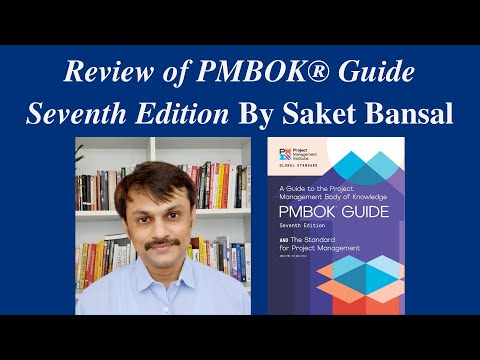
You should not worry about the PMBOK version since we will give you PMI’s Exam Prep Book for the PMP exam along with our course. The PMI has a separate book for the PMP exam now. PMI’s exam reference guide has more material from PMBOK 6 than anything else. So you should not worry about PMBOK 7.
PMI’s Exam Prep Guide, designed as per the PMP exam syllabus, is followed in our PMP training and foundation concepts of Project Management, supported by PMBOK 6 and Agile videos. This is producing great results for our clients in the PMP exam.
We do not deal in Prince 2 as we know that PMI is more globally known for the certification of Project Management.
It is not necessary, but definitely a good idea. Our content covers agile well, but adding some Agile certification by doing CSM is a good idea since it will also help you in PMP preparation.
In the current scenario, more and more organizations are moving to Agile. Most of the participants also come from different backgrounds including IT, construction, oil & gas, automobile, etc. Therefore, PMI always tries to make PMP® relevant based on the needs of different industries. In the new PMP exam pattern, approx. 50% of questions will be around project management concepts in an Agile environment. To make your journey easy, we have designed the course for you in such a way that will help you to pass the exam on the first attempt. We also provide pre-learning material to understand sufficient Agile. So, even if you are new to Agile, don’t worry, our e-learning system will help you to learn and understand all the concepts in the best possible way.
First of all, we need to understand that it is a misconception that Agile concepts are related to IT. Rather these are values and principles which help you to respond to the change in the business situations. Today, we live in a dynamic environment where most industries are adopting Agile. Rest assured, in the PMP® session the trainer will definitely mentor based on the participant’s overall experience and considering the PMP exam need.
You just need to explore basic adaptive/agile life cycles fundamentals related to the project management like –
For PMP®, you need to know the Agile manifesto that tells Agile Values and Principles, and a basic understanding of how risks, costs, and changes are managed in Agile. We have a separate set of videos that make you ready for Agile knowledge before you come to the PMBOK or other project management processes. Our PMP® course is a complete learning solution that is designed to pass the exam in the first attempt irrespective of your background. We also combine videos and live classes in such a way that you get comfortable with concepts and pass the exam in the shortest possible time.
For more detail, please watch the following video –

There are certain things that you need to take into consideration:
To know more about the same, check out this Online Proctoring Exam Preparation – the Dos and Don’ts video.
Yes, we record all Live sessions and within 24 hours these recordings will be available to participants.
Yes, we will keep a record of attendance for all the PMP® virtual live sessions.
Yes! We welcome candidates from around the world as it’s a fully online PMP® training. We request you to check the timing of the PMP® training online sessions that will be held at your local time so that you can attend the PMP® virtual live session. For your convenience, we have already set all the batches as per different countries including the US & Canada, Australia, New Zealand, Hong Kong, UAE, France, Germany, South Africa, Egypt, Saudi Arabia, India & Srilanka. So that you can freely join the batch of your choice.
The average class size of the PMP® virtual live session will be 20-30 students.
Yes! In case your organization is funding your training, you can let us know and we will be happy to create one for you. You can write to support@izenbridge.com and ask the support team for an official invoice for the PMP® virtual live training session.

Write a Review
You must be logged in to post a comment.